Blog Post
Approvals Now Carry a Name
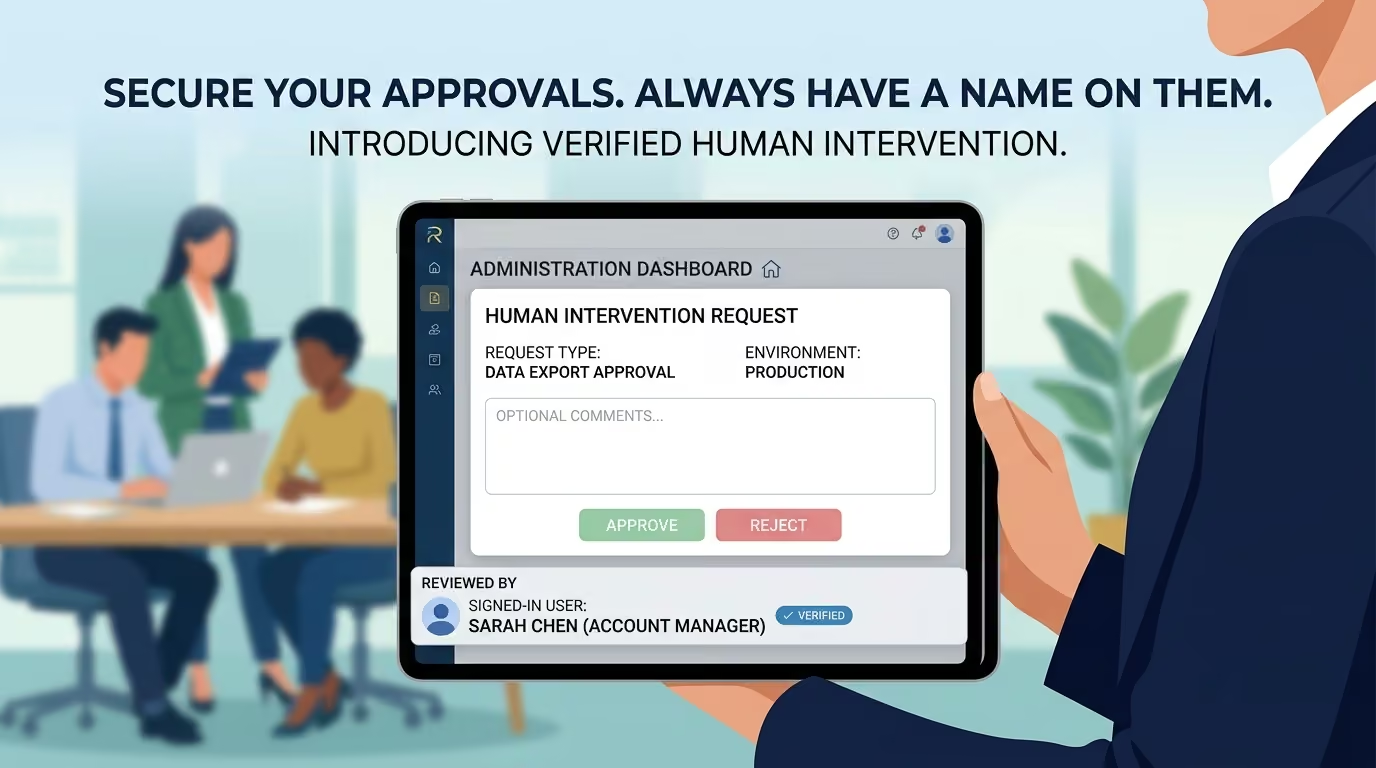
The Human Intervention action pauses a run, hands a person a form, and resumes with their answer. It has always been the part of AI Rule Engine that keeps a human in charge of the decisions that matter. What it could not tell you, until now, was which human.
Answering a request took the link and nothing else. Anyone holding the URL could complete the form, which made the link itself the credential - and a link that arrives by email is a link that gets forwarded. The record afterwards said an approval had happened, not who had given it.
That is now closed. A human intervention form is answered by a signed-in member of your organization, and the decision is stored against them.
What a reviewer does now
Almost exactly what they did before, with one addition.
The link still arrives however you send it, usually by email from an earlier action in the same ruleset. Opening it while signed out takes the reviewer through sign-in and then puts them back on the form they were pointed at. It is still a single click from the inbox to the decision; there is no copying URLs around and no landing on a home page wondering where the request went.
Once they are signed in, two things have to be true:
- They are a member of the organization that raised the request.
- They have the environment that raised it selected.
If either is not true, the page says so and tells them what to do about it: sign in, select the environment, or switch to the one that raised the request and reopen the link. An expired session gets its own message rather than a generic failure, because “sign in again” and “you are not allowed to do this” are different problems and should not read the same.
Everything else about the action is unchanged. Link expiration still defaults to one hour, maximum uses still defaults to one, and an expired or exhausted link is still refused with the reason spelled out.
Why a forwarded link is no longer an approval
Forwarding is the ordinary case, not the exotic one. Someone is out, they pass the email to a colleague, and the colleague clicks the button. Before, that worked - and the record could not tell the difference.
Now the link identifies the request, and the person’s account identifies the approver. Both are required. Forwarding a link to someone outside the organization gives them nothing to do with it, and forwarding it to a colleague inside the organization records the approval against that colleague, which is exactly right: they are the one who made the call.
Requests raised in one environment cannot be answered from another, either. Whether the reviewer is in the wrong environment or a different organization entirely, they see the same message, so a stray link never becomes a way of confirming which tenant raised it.
The decision shows up where you will look for it
A resumed run names both the action that paused and the person who answered it. That means the answer to “who approved this?” lives in the run history, next to what the approval actually caused, months after everyone has forgotten which email carried the link.
Your audit log tells the same story from the other side, and it holds up over time: if the approver’s account is later removed, their past entries read as Deleted user rather than going blank. The approval never becomes a record of nothing.
What about AI agents?
Nothing here changes the agent path, which was designed with attribution in mind from the start. When Allow AI agents to submit is on, an assistant connected over the MCP server can read the pending form and submit it on your behalf, and the submission is recorded against the MCP credential it used. Turn the option off and the form can only be completed through the web link by a person.
Either way, the record names something specific. That is the whole point.
If your approvers are not members yet
This is the one thing worth checking before you route approvals outside your team. If the people who sign off on your exceptions are not in the organization, add them and give them access to the environment that raises the requests. From there they approve from the link the way they always have.
An approval nobody can be named for is not an approval anyone can rely on. Now every one of them has a name on it.
Visit RuleEngine.ai to try it.
The AI Rule Engine Team